
From Physical Complexity to Actionable Intelligence
Spacetime Labs is a Brazilian company that builds and scales ventures to transform multiple physical industries with Causal World Models.
Founded in 2014, we work at the intersection of science, artificial intelligence, engineering, and design—turning complex physical systems manageable with actionable intelligence and breakthrough solutions.
Our ventures address some of the most consequential challenges across agriculture, materials, climate risk, and computational biology.





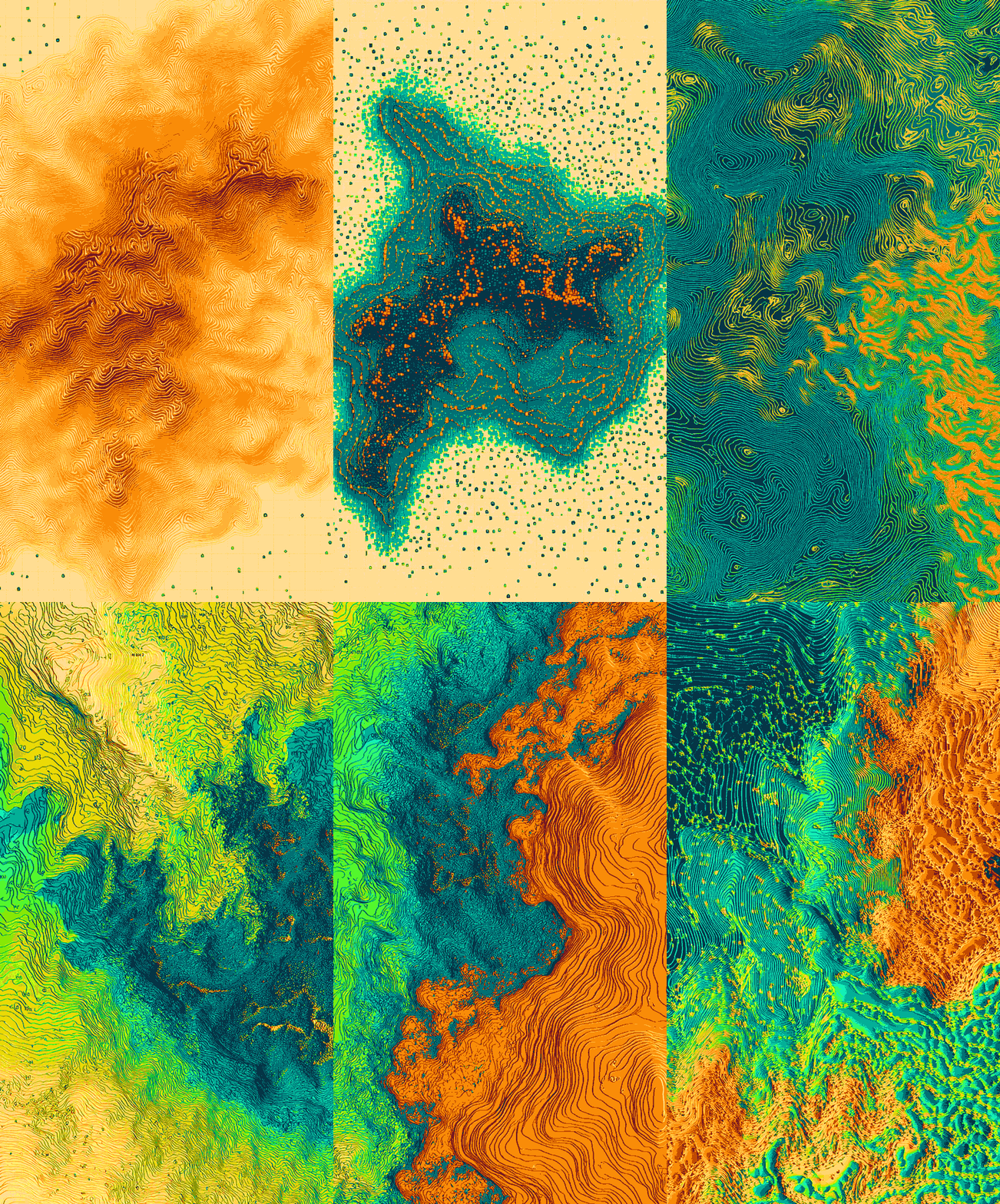


Built in Brazil. Designed to Scale Globally.
Brazil is one of the world’s richest environments for Physical AI innovation.
Its agricultural scale, critical mineral resources, biodiversity, industrial base, and exposure to climate complexity create a unique environment to develop and validate technology solutions for some of the world’s most fundamental problems.
We use Brazil as an innovation lab—working with leading industry and research partners to develop solutions in real-world conditions before scaling them globally.
A history of turning complex problems into real-world innovation.
-
![Planetary Skin Institute]()
2009–2011
Planetary Intelligence
SpaceTime Labs’ founders establish the Planetary Skin Institute (PSI), a Silicon Valley R&D organization co-founded with NASA.
PSI is recognized by TIME as one of the top innovations of 2009 and helps co-design Brazil’s National Early Warning System for Natural Disasters, CEMADEN.
-
![SpaceTime Labs]()
2014–2015
SpaceTime Labs
SpaceTime Labs is founded in Brazil.
A five-year AI innovation partnership with Raízen begins, applying advanced intelligence to one of the world’s largest bioenergy operations.
-
![Earth Bank of Codes]()
2016–2018
From Artificial to Biological Intelligence
SpaceTime Labs partners with the World Economic Forum and global genomics leaders to help launch the Earth Bank of Codes and Earth BioGenome Project.
New collaborations with Bayer CropScience, Swiss Re, Yara, and other industry leaders expand our work across agriculture, risk, and natural resource systems.
-
![Climate Risk – Ripples]()
2019
Climate & Systemic Risk
SpaceTime Labs and VanderSat win the EU–FINEP EUREKA competition to develop an AI platform for energy risk management.
We also lead a global science and engineering consortium exploring an Amazon-wide early warning system for zoonotic spillover.
-
![Autonomous Per Plant Farming]()
2020
Autonomous Per Plant Farming
A strategic innovation partnership with SLC Agrícola begins to develop, test, and scale technologies for Autonomous Per Plant Farming.
This collaboration establishes the real-world foundation for what would become Moray years later.
-
![Moray & Ubiratã – From Technologies to Ventures]()
2021–2023
From Technologies to Ventures
SpaceTime Labs begins translating years of R&D into dedicated ventures across agriculture and materials.
Moray emerges around Per Plant Farming and agricultural autonomy, while Ubiratã applies digital twins and AI to complex material systems.
A new FINEP grant supports advances in artificial intelligence and robotics for agriculture.
-
![Spacetime Labs: Building the Next Generation of Deeptech Ventures]()
Today
Building the Next Generation of Deeptech Ventures
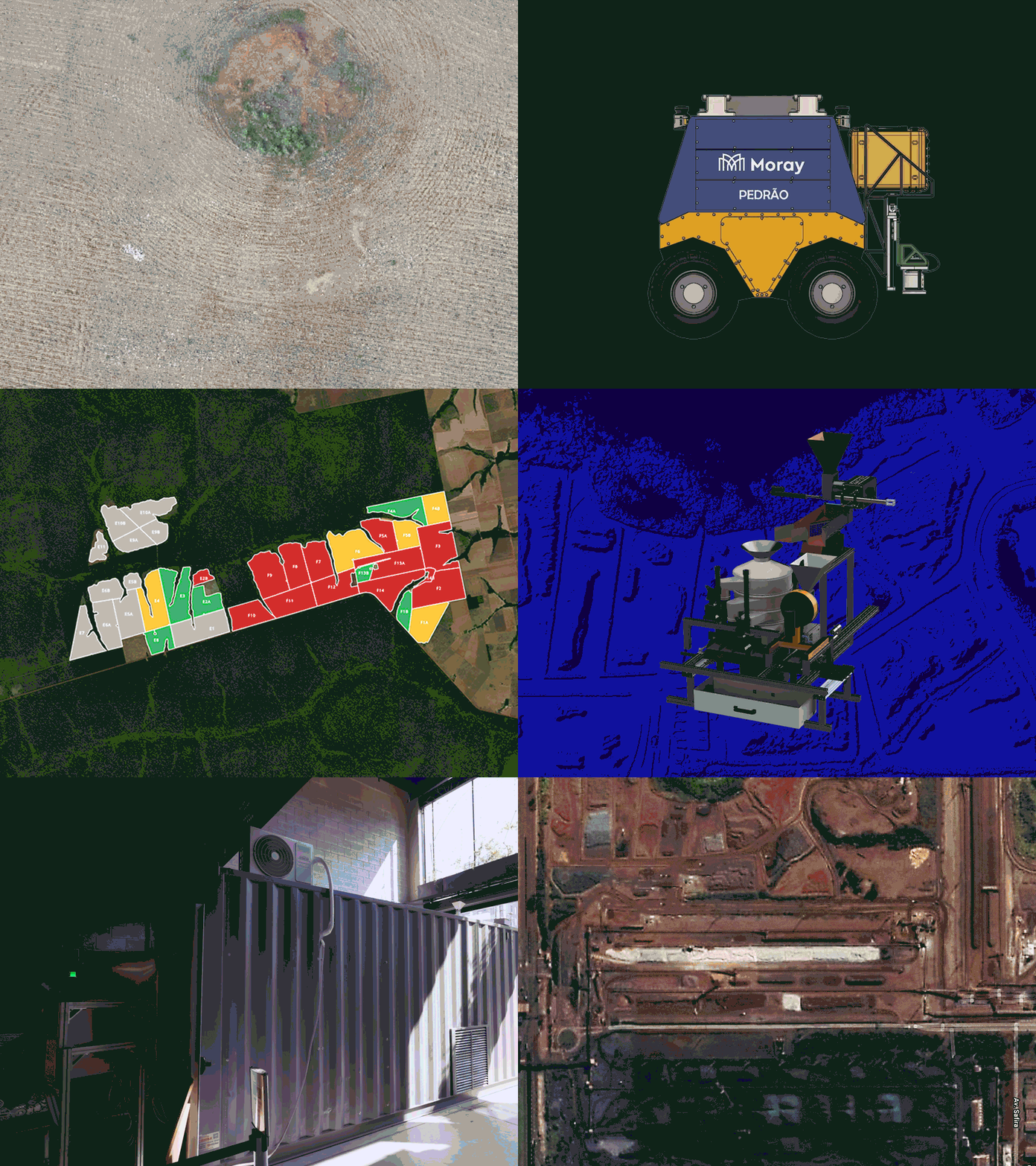
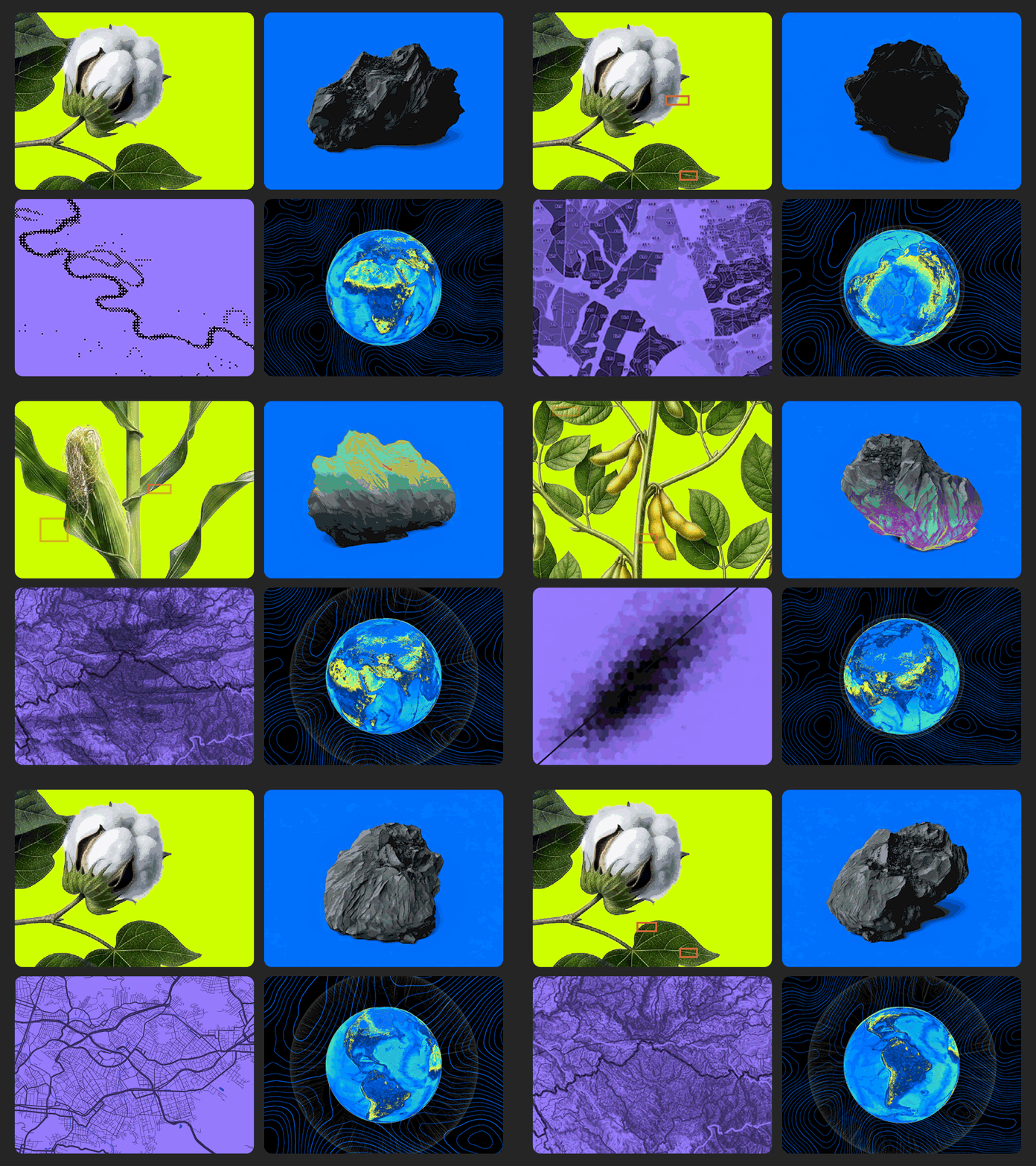
Our portfolio now spans agriculture, computational biology, climate risk, industrial systems, and critical mineral exploration.
Across these domains, one principle connects our work: understand complex physical systems, turn that understanding into intelligence, and translate intelligence into action.
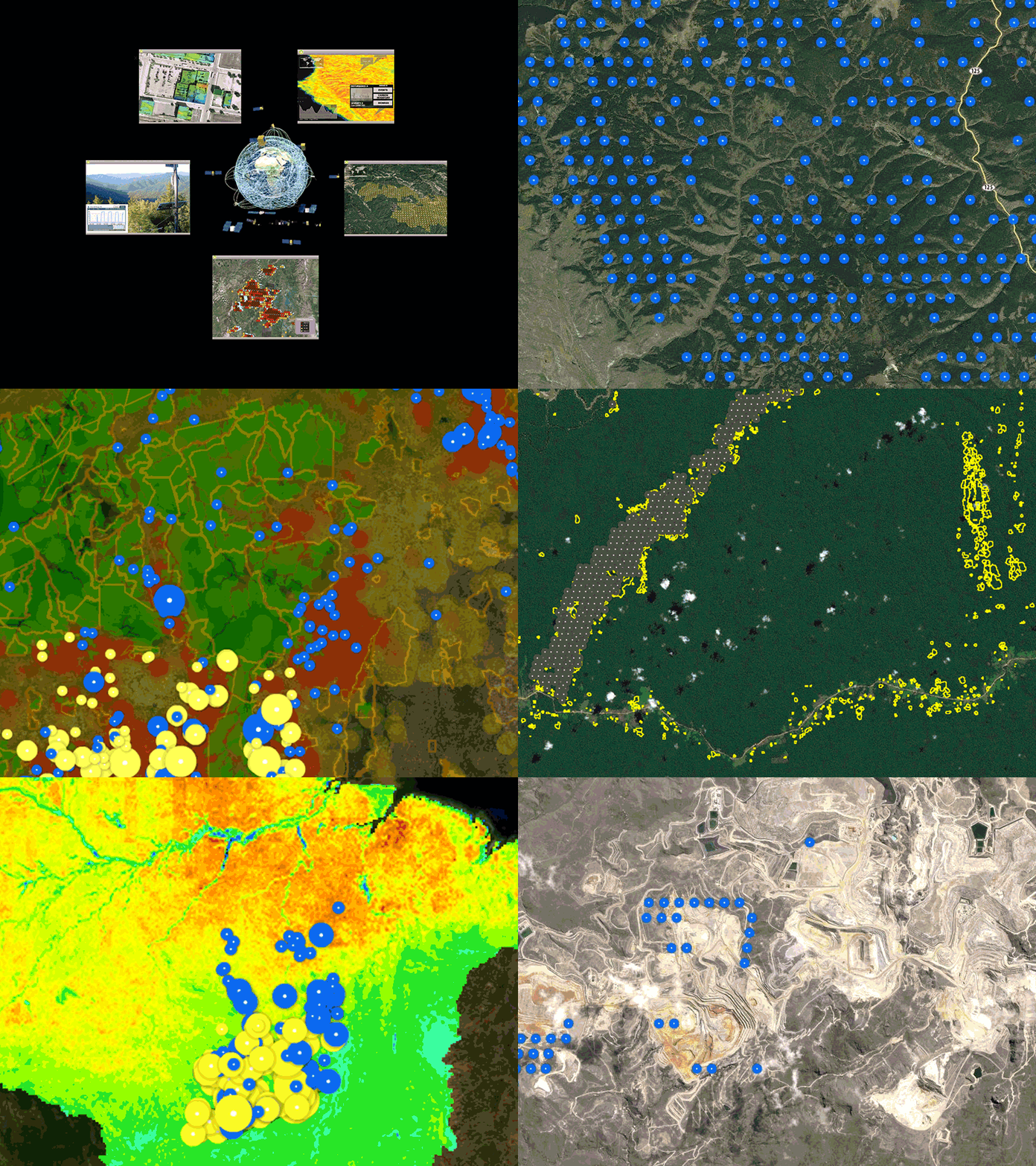


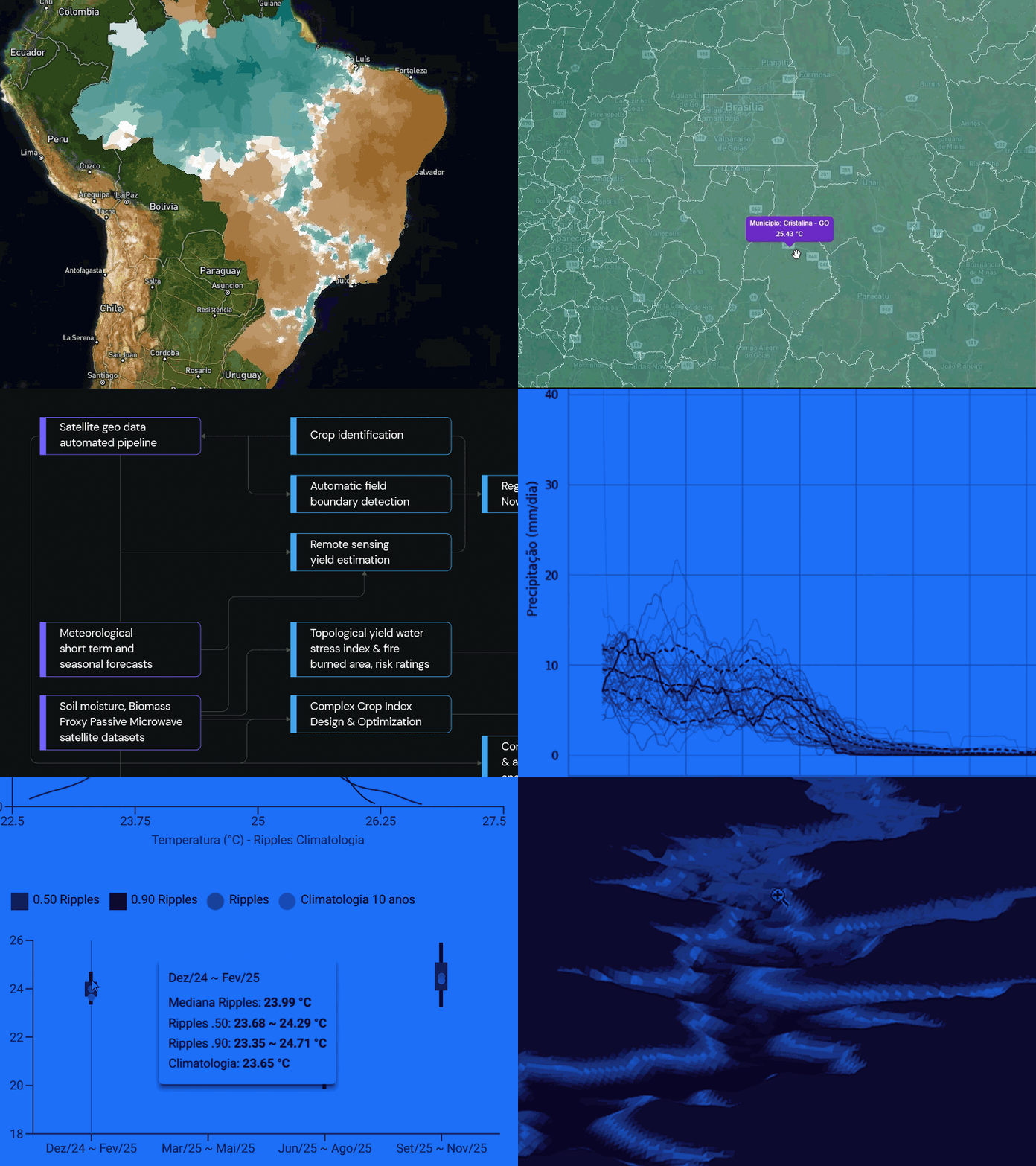
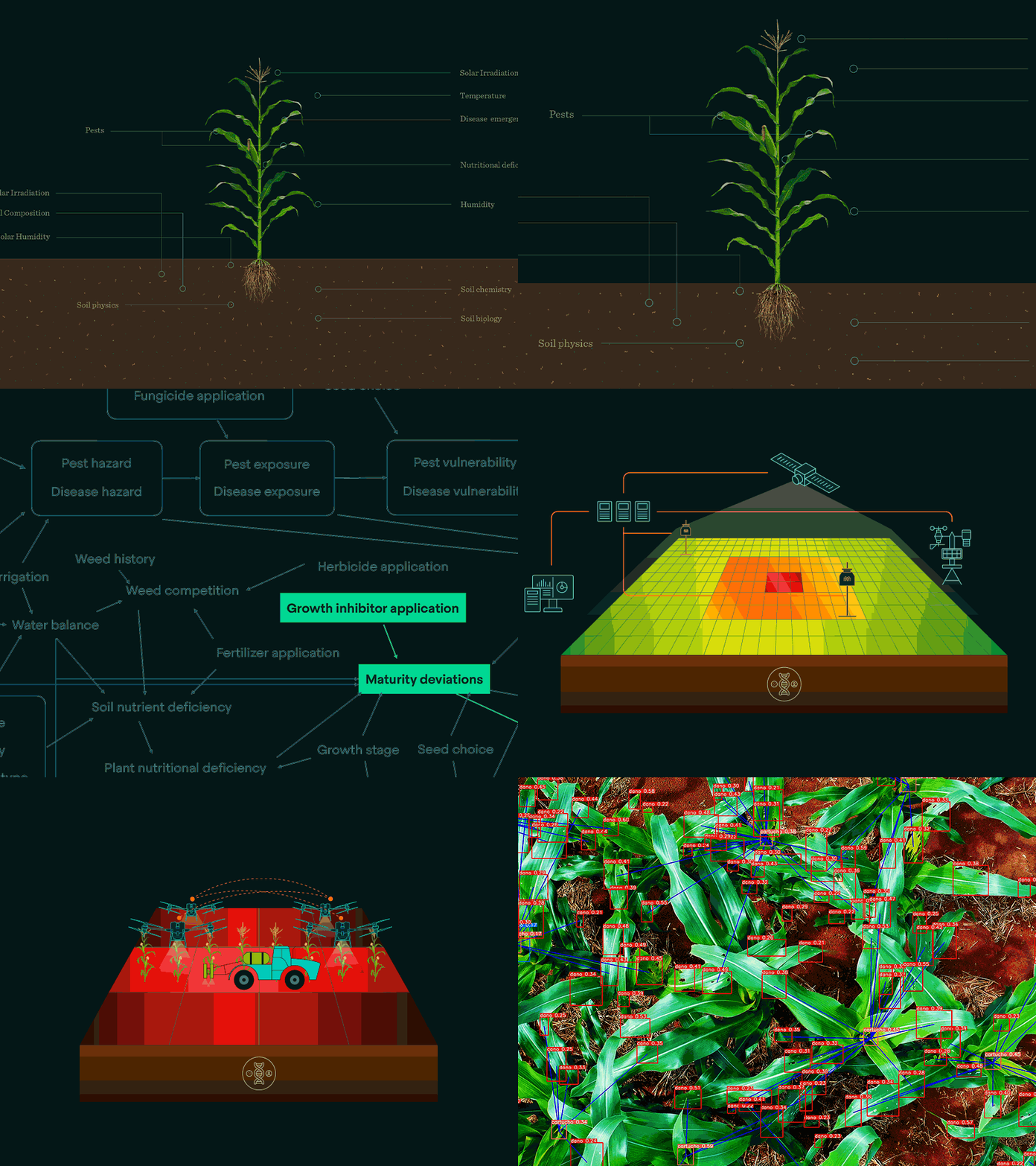
Breakthrough innovation is a collaborative endeavor
We work with leading scientific institutions, universities, public innovation agencies, and industry partners to combine frontier research with real-world experimentation.
-
![FINEP]()
Long-term supporter of SpaceTime Labs' R&D through competitive programs spanning climate and energy risk intelligence, artificial intelligence, and autonomous agricultural robotics.
-
![Insper]()
R&D collaboration in robotics, autonomous systems, and advanced manufacturing, alongside deeptech entrepreneurship education for the next generation of science-driven founders.
-
![World Economic Forum]()
Global partner in launching the alliance between the Earth BioGenome Project and the Earth Bank of Codes—advancing new infrastructure for biodiversity science and bioeconomy innovation.
-
![Earth BioGenome Project]()
An international scientific moonshot to sequence, catalog, and characterize Earth’s eukaryotic biodiversity, creating a new foundation for biological discovery.

Built for Experimentation
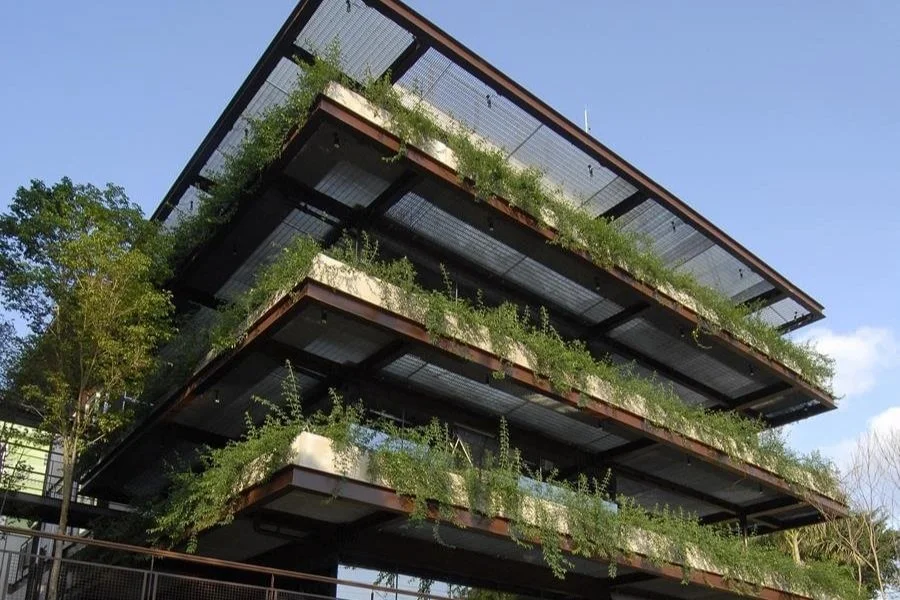
Science, engineering, and venture building under one roof
Our teams work across multiple scientific disciplines, artificial intelligence, software engineering and advanced robotics.
Our R&D environments are designed for rapid iteration—from high fidelity in-silico simulation, rapid prototyping and testing in physical systems.
HQ
Alto de Pinheiros
São Paulo, Brazil
R&D Center
Pinheiros
São Paulo, Brazil

Leadership
SpaceTime Labs brings together scientists, engineers, entrepreneurs, and industry specialists with experience translating frontier technology solutions into real-world systems and ventures.
-
![Juan Carlos Castilla-Rubio]()
Juan Carlos Castilla-Rubio
-
![Fabiano Adegas]()
Fabiano Adegas
-
![Fabio Faria]()
Fabio Faria
-
![Fabio Vessoni]()
Fabio Vessoni




Join Us
Work on problems that matter
We’re looking for scientists, engineers, designers, and problem-solvers who are curious about how the world works—and passionate about how it could work better.
If you want to apply frontier science and technology to some of the most complex challenges of the physical world, we’d like to hear from you.